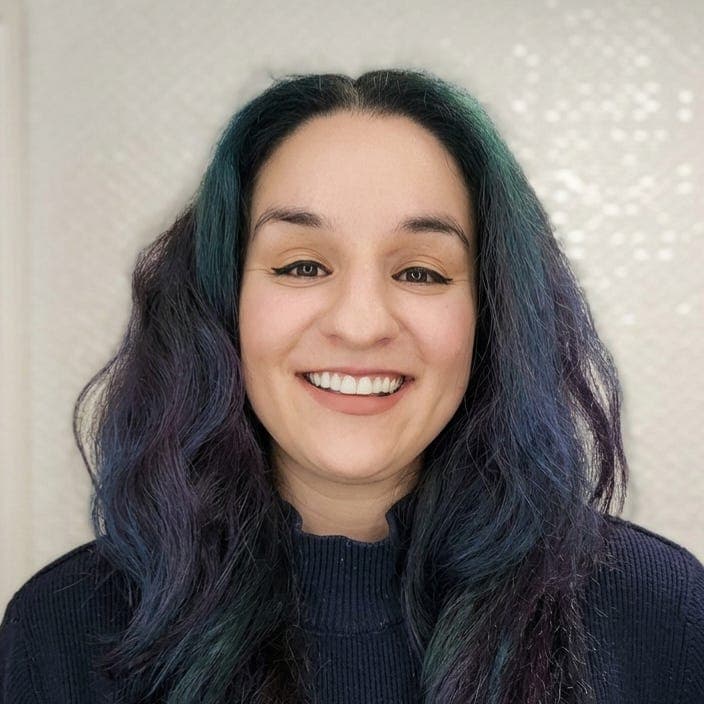
Before
The medication blocked most of my brain’s dopamine receptors. It caused a long list of severe symptoms and blocked my brain’s ability to think clearly. It was the worst thing that ever happened to me, worse than any of my autoimmune diseases.
I had gone to a psychiatrist after tapering off another medication and feeling depressed during a rough personal stretch. She told me that because I talk fast, was depressed, and because my mom has bipolar disorder, I might have cyclothymia. I was skeptical because I did not have mood swings. She warned me the condition would worsen untreated and said there was no harm in trying the medication. She prescribed lurasidone.
That did not turn out to be the case. My primary care provider later told me the psychiatrist had documented a medical history I did not recognize and had not reported. AI isn’t the only one hallucinating. A second psychiatrist said the diagnosis was wrong, but that the medication was doing no harm, and cut the dose in half. An already severe set of symptoms became catastrophic. Until then I had believed my own emotions were responsible, because I did not understand enough about how the medication worked. Quick research had told me lurasidone “balances” dopamine. In reality it blocks dopamine receptors.
What changed
I realized the new doctor was wrong: the medication was causing the strange symptoms, and reducing it that much at once was making them far worse. She said the medication couldn’t cause what I was experiencing, even though those effects were in the medicine’s warnings.
Because my doctors did not seem to know what they were doing, I turned to ChatGPT. It helped me understand the research, not replace a clinician. It introduced me to hyperbolic tapering: decreasing each next dose by a small percentage of the last dose, sometimes 10% or even 5%, instead of 50%. Psychiatric drugs affect receptors in a nonlinear way, so small reductions at low levels can hit harder than bigger cuts at high doses.
ChatGPT found a study mapping dopamine receptor occupancy to dose. I asked it to extrapolate that data into four possible curves so I could plan reductions that would not change receptor activity too sharply.
Eventually I found a psychiatrist who already understood hyperbolic tapering, reviewed the same research, and agreed the plan made sense. He continues to prescribe according to that chart.
Outcome
I’m still tapering, and coming off completely will take about eight months, but the difference has been dramatic. Instead of catastrophic symptoms after large cuts, each reduction has been much more manageable.
I could not have executed this without a doctor agreeing to prescribe to my graph. On my own I could not have cut a 20mg pill into 8.5 or 3mg doses, and AI could not have called in the compounding pharmacy prescription. It could only help me make a plan to suggest. Thankfully the doctor agreed.
Without ChatGPT, I likely would have followed standard tapering advice, cut too quickly, and risked lasting harm—or come off the rest cold turkey from the smallest prescribed dose.
Explore this story
- Read more detail about my story
papercuts.substack.com/p/debugging-my-doctor-using-chatgpt
What made this possible
Step 1: Do not rely on AI for health advice or treatment decisions. Step 2: Use AI to help you understand medical topics and turn that into better questions for licensed clinicians. Step 3: Include your personal and family medical history in the research so the AI can help surface possible correlations worth asking a doctor about. Step 4: Bring those questions, and any research you found, to your doctors so they can evaluate it with you.
Enjoyed this story?
Discover another real way people are using AI.

AI saved me from a missed diagnosis
A busy founder used AI to reassess his health priorities, leading him to get screenings that caught a serious condition early.
Read next story